

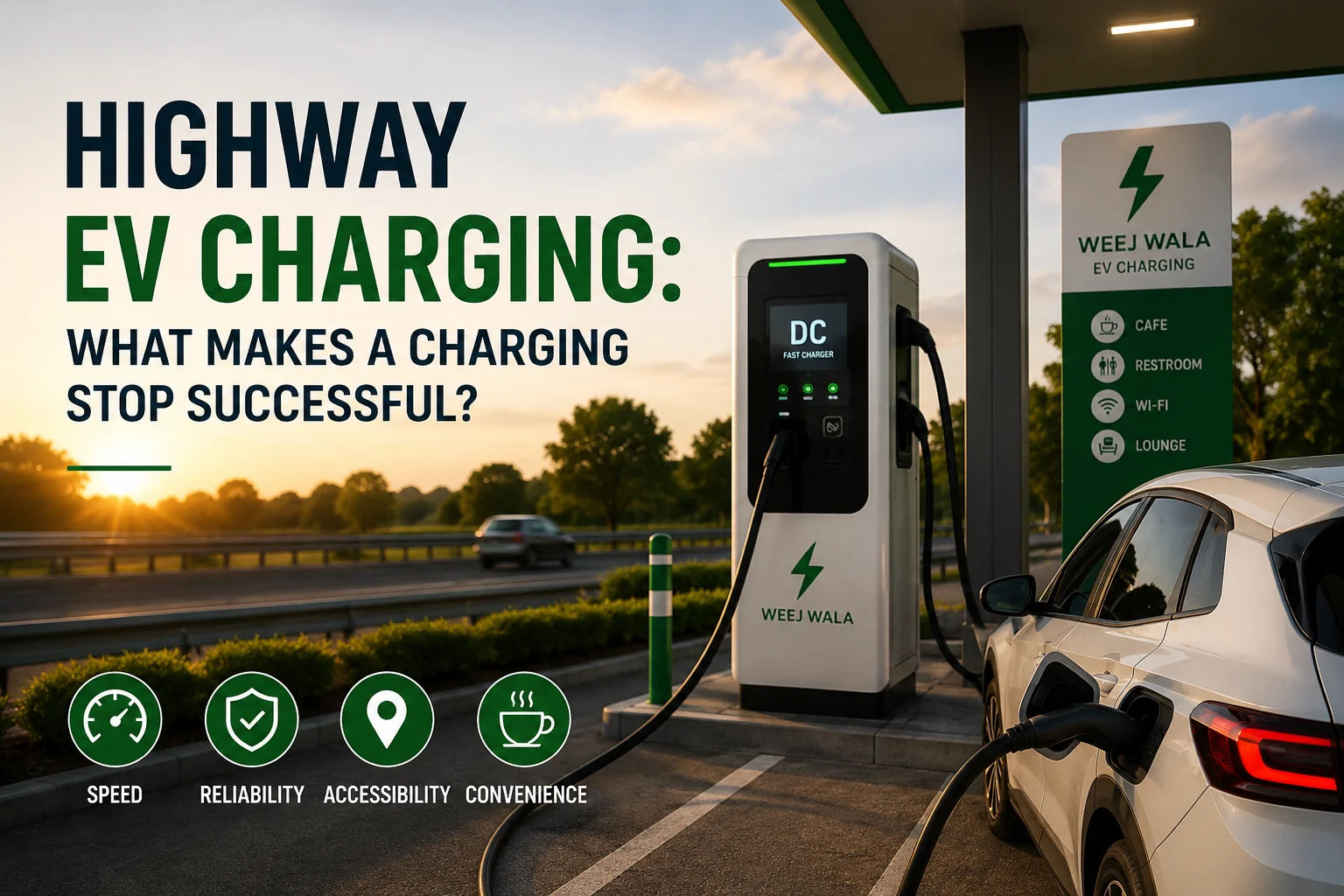
Long-distance EV travel is becoming easier as charging infrastructure expands across India. But simply installing a fast charger at a highway location does not automatically make it a successful charging site. Drivers expect the charging experience to be quick, reliable, easy to understand and convenient.
For charging operators and businesses, this means that choosing the right location is only the first step. The surrounding facilities, charger availability, uptime, payment experience and overall accessibility can have just as much impact on how frequently a station is used.
Location matters more than just highway traffic
A highway may have thousands of vehicles passing through every day, but that does not necessarily mean every location is suitable for EV charging.
The ideal charging location should be easy for drivers to enter and exit without making a significant detour. Visibility from the highway can also make a difference, particularly for drivers who are unfamiliar with the area.
Operators should consider nearby cities, major routes, tourist destinations, industrial areas and frequently travelled intercity corridors when evaluating a potential location.
A location that combines strong traffic with convenient access can have a much better chance of attracting repeat users.
Charging speed affects the overall experience
Highway drivers are generally more time-sensitive than drivers charging at home or at workplaces.
A driver stopping during a long journey wants to spend as little time as reasonably possible at the charging station. This makes DC fast charging particularly important for highway locations.
However, charging speed should be considered alongside the vehicle’s charging capability. A high-powered charger does not necessarily mean every vehicle will charge at the same speed.
The station should therefore provide clear information about available connectors, charging capacity and expected charging performance.
Availability is critical
A fast charger that is frequently unavailable can be frustrating for drivers.
Imagine a driver arriving at a station with only a small amount of battery remaining and discovering that the charger is offline. The problem is not simply that the charger is unavailable — the driver may now need to find another charging location while having limited range remaining.
Remote monitoring, preventive maintenance and responsive support can help operators maintain reliability.
High charger uptime should therefore be treated as an important operational metric rather than an optional feature.
Clear information makes charging easier
Drivers benefit from knowing charger availability, connector type and charging capability before reaching the site.
Digital station discovery can make planning easier. When drivers can check whether a charger is available and understand what type of charging equipment is present, they can make better decisions before starting or continuing their journey.
Clear signage at the physical location is equally important.
- Where the charging area is located
- Which parking bays are meant for EV charging
- Which connector belongs to which charger
- How to start a charging session
- Where to find payment information
- How to contact support if something goes wrong
The surrounding facilities matter
Charging does not happen instantly, even with fast chargers.
While the vehicle is charging, drivers may want access to basic amenities. A highway charging station located near a restaurant, café, convenience store, washroom or rest area can provide a much better experience than an isolated charger.
This is particularly important for families and drivers travelling long distances.
A well-designed charging destination can turn charging time into useful break time instead of making the driver feel like they are simply waiting for the vehicle.
Parking and charger layout should be considered
The physical layout of the charging area can significantly affect usability.
Charging bays should provide enough space for vehicles to enter, position themselves correctly and leave without unnecessary manoeuvring.
Cable length should also be considered when positioning chargers. Different EVs have charging ports in different locations, so the charging setup should accommodate a range of vehicle designs.
Good lighting, visible markings and clear traffic flow can further improve the experience.
Payment should be simple
A charging station can have excellent hardware and still provide a poor experience if payment is complicated.
Drivers should be able to understand the charging price before starting a session and should have a straightforward way to pay.
Digital payment options can make the process faster and reduce friction.
The objective should be simple: arrive, connect, start charging and pay without unnecessary steps.
Reliability requires ongoing maintenance
Installing a charger is not the end of the project.
Charging infrastructure requires ongoing monitoring and maintenance to ensure that equipment remains operational. Connectors, cables, displays, communication systems and payment systems can all experience issues over time.
Operators should have a process for identifying problems quickly and resolving them before they significantly affect customers.
Remote monitoring can be particularly useful because it allows operators to identify certain issues without waiting for a customer to report them.
Why highway charging networks need consistency
For EV drivers travelling between cities, confidence in the charging network is extremely important.
A driver planning a Mumbai-to-Pune journey, for example, may choose a route based partly on where reliable charging stations are available.
If charging locations provide a consistent experience — reliable hardware, clear information, convenient payment and predictable support — drivers can plan their journeys with greater confidence.
Over time, this reliability can contribute to greater EV adoption and increased usage of charging infrastructure.
What operators should evaluate before choosing a site
Before installing highway charging infrastructure, operators should evaluate several factors.
Traffic and accessibility
The location should have sufficient vehicle movement while remaining easy to access from the main route.
Electrical infrastructure
The available electrical capacity and the requirements of the planned charging equipment need to be evaluated before installation.
Charger mix
Different locations may require different combinations of AC and DC chargers depending on the expected users and dwell time.
Customer amenities
Nearby food, washroom, parking and rest facilities can make the charging stop significantly more useful.
Operations and maintenance
A clear plan for monitoring, maintenance and customer support should be established before the station goes live.
The role of technology
Modern charging infrastructure is more than the physical charger installed at a site.
Software can help operators monitor stations, track charging sessions, manage pricing and identify equipment issues.
For drivers, technology can provide information about station locations, charger availability and charging status.
When hardware and software work together, operators can manage their network more efficiently while providing drivers with a more predictable experience.
What makes a highway charging station successful?
A successful highway charging station is not defined by the number of chargers installed alone.
It is the combination of several factors:
Location + accessibility + reliable charging + clear information + convenient payment + useful amenities + ongoing support.
A station that performs well across these areas is more likely to attract repeat customers and become a useful part of the wider EV ecosystem.
Final takeaway
A successful highway charging site combines speed, accessibility, uptime and convenience.
The charger is important, but the complete stop experience matters just as much. As India’s EV market continues to grow, charging operators and businesses have an opportunity to create infrastructure that makes long-distance electric travel easier and more predictable.
For businesses considering EV charging infrastructure, the goal should not simply be to install a charger. The goal should be to create a reliable charging destination that drivers can confidently include in their journey plans.