

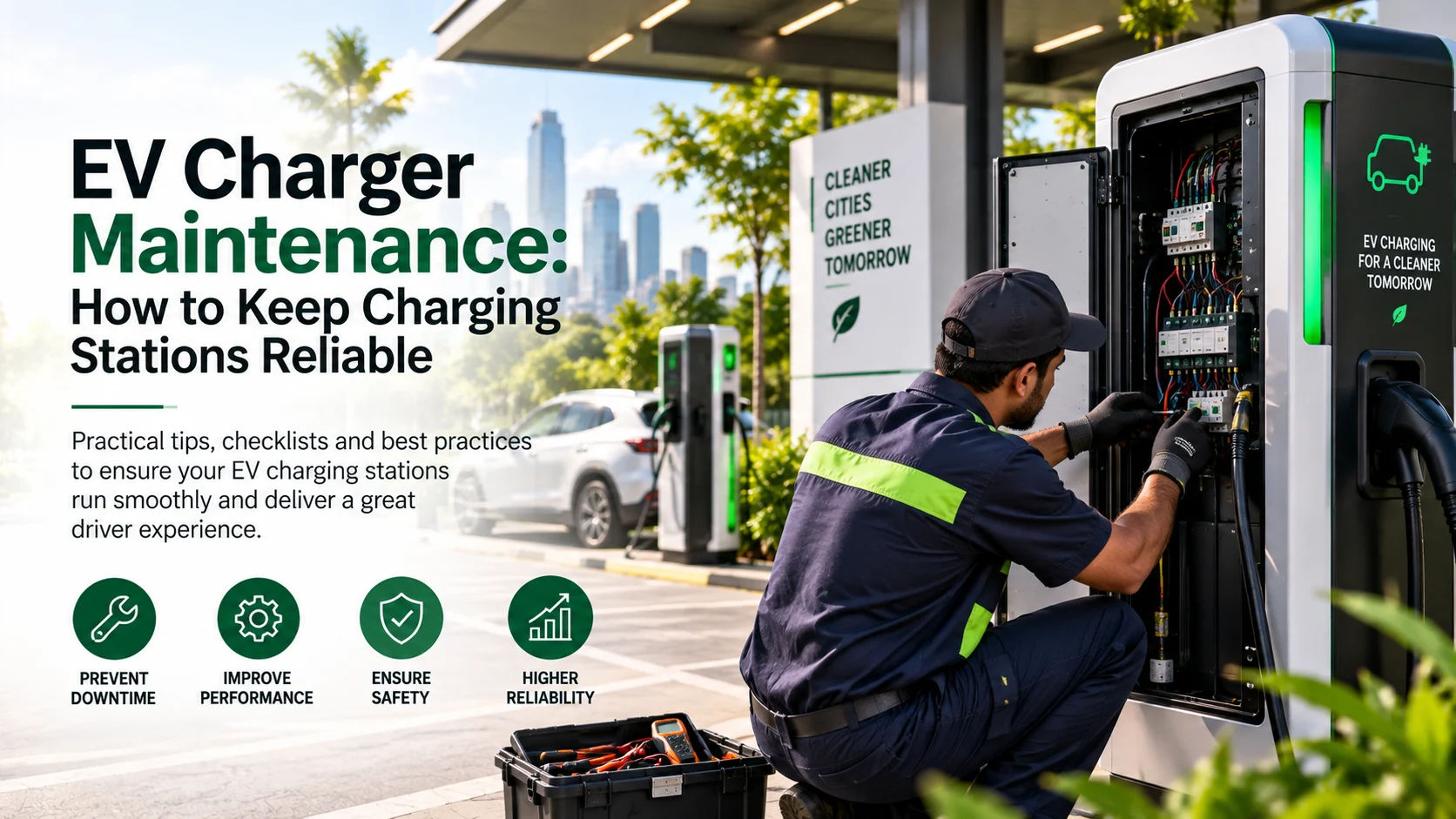
Reliable Charging Stations Depend on Consistent Maintenance
Installing an EV charger is only the first stage of operating charging infrastructure. Over time, connectors are used repeatedly, cables experience daily handling, electrical components operate continuously and software systems require monitoring. A structured maintenance programme helps operators identify issues before they become prolonged outages.
The goal is not simply repairing failed chargers. It is maintaining reliable service through regular inspection, monitoring and timely corrective action.
Preventive Maintenance vs Reactive Repairs
Reactive maintenance begins after something fails. Preventive maintenance focuses on identifying wear, abnormal behaviour and potential issues earlier.
| Preventive Maintenance | Reactive Repair |
|---|---|
| Scheduled inspections | Fault occurs first |
| Connector condition checks | Replace damaged parts after failure |
| Software monitoring | Investigate unexpected outage |
| Maintenance records | Limited historical context |
1. Inspect Connectors Regularly
Connectors are among the most frequently handled parts of a charging station. Operators should visually inspect them for signs of damage, contamination, unusual wear or poor fitment and arrange qualified servicing whenever issues are identified.
2. Check Charging Cables
Cables should remain in good condition and be stored properly when not in use. Repeated bending, accidental impact or improper handling can affect long-term reliability.
3. Monitor Charger Availability
A charging management platform can help operators monitor whether chargers and individual connectors are online, available and functioning as expected. Availability should be reviewed together with session success rather than relying on a single uptime percentage.
4. Track Failed Sessions
A charger may appear operational while users experience failed charging attempts. Tracking authentication issues, communication problems, payment failures and charging interruptions helps operators detect customer-facing problems earlier.
5. Maintain Service Records
Every maintenance activity should be documented with the charger ID, date, issue description, corrective action, technician notes and replacement components where applicable. Historical records make recurring faults easier to identify.
6. Prepare for Weather and Environmental Exposure
Outdoor charging stations are exposed to dust, heat, rain and changing environmental conditions. Site inspections should include enclosure condition, drainage around outdoor installations and physical protection appropriate to the operating environment.
7. Keep Electrical Safety a Priority
Electrical equipment should only be inspected or serviced by appropriately qualified personnel following applicable safety procedures. Operators should establish clear escalation processes whenever abnormal electrical behaviour is observed.
8. Review Software and Connectivity
Modern chargers depend on communication with backend systems for monitoring, session management and operational reporting. Repeated connectivity issues should be investigated because they can affect customer access and operational visibility.
9. Measure Maintenance KPIs
- Charger uptime
- Connector availability
- Total downtime
- Failed charging sessions
- Fault frequency
- Mean time to detect
- Mean time to resolve
- Maintenance incidents per charger
10. Create a Practical Maintenance Schedule
The maintenance schedule should reflect charger usage, site environment and manufacturer recommendations. High-utilisation public chargers may require more frequent inspection than low-utilisation destination chargers.
A structured schedule should include routine visual checks, operational monitoring, periodic technical inspection and documented corrective maintenance.
Warning Signs That Need Attention
- Repeated failed sessions
- Frequent offline status
- Loose or visibly damaged connector components
- Unusual error alerts
- Unexpected charging interruptions
- Repeated communication failures
Final Takeaway
Reliable EV charging infrastructure is created through consistent monitoring and preventive maintenance rather than waiting for equipment to fail. Operators that maintain accurate service records, monitor charger performance and respond quickly to recurring issues can improve uptime and provide a better experience for drivers.
Frequently Asked Questions
How often should EV chargers be maintained?
The appropriate schedule depends on usage, environment and manufacturer recommendations. High-utilisation public chargers generally require more frequent operational review.
Why should failed sessions be tracked?
Because a charger can appear online while customers still experience charging failures. Session success is an important reliability metric.
What is the benefit of maintenance records?
They help operators identify recurring faults, improve troubleshooting and build a history of each charging asset.