

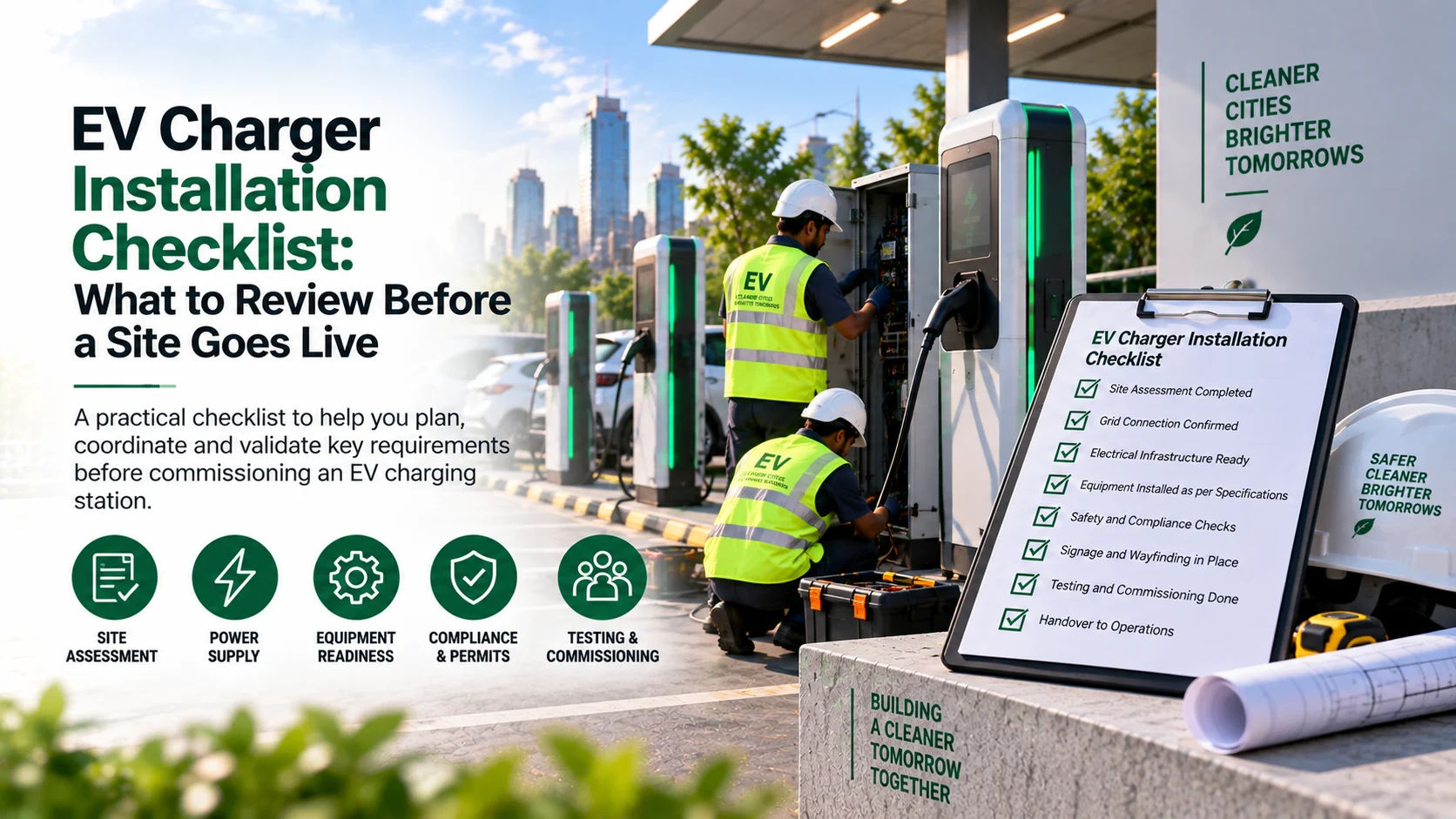
Introduction
Installing an EV charger is not complete simply because the equipment is mounted and powered on. Before a charging site goes live, the electrical installation, physical layout, charger configuration, connectivity, safety measures, payment flow, signage, monitoring and handover process should all be reviewed. A structured EV charger installation checklist helps operators identify issues before drivers depend on the station.
Why a Pre-Go-Live Checklist Matters
A charger can appear operational while important details remain unfinished. Network communication may be unstable, a payment tariff may be incorrect, parking access may be difficult, or multiple chargers may exceed the planned site load when used together. A pre-go-live inspection looks at the complete charging experience rather than only whether the charger starts a session.
1. Confirm the Site and Installation Scope
Verify that the installed equipment matches the approved scope. Check the charger model, quantity, rated power, number and type of connectors, mounting arrangement, cable lengths, parking bays and accessories. Compare the completed installation with the final site layout and confirm that the charger is positioned where the intended vehicles can enter, park and leave safely.
2. Review Electrical Capacity
Confirm the available electrical capacity and the final distribution arrangement. Review dedicated circuits, cable sizing, protective devices, isolators, connections, earthing and bonding as applicable to the installation. For multiple chargers, confirm how simultaneous charging will be managed. If smart charging or load management is used, verify the configured site limit and charging priorities before launch.
3. Inspect Civil Work and Mounting
Inspect the foundation or mounting surface, charger stability, cable routing, protective barriers and surrounding space. Cables should not create avoidable trip hazards or interfere with vehicles. Confirm that the charging bay is practical for the intended vehicle types. Outdoor installations should also be reviewed for drainage, weather exposure and the environmental conditions specified for the equipment.
4. Review Safety and Protection
Complete the applicable electrical and site safety checks before opening the station. Review protective devices, emergency isolation arrangements, earthing, enclosure protection, access to electrical equipment, safety instructions and obvious physical hazards. A successful charging session does not by itself prove that every safety requirement has been satisfied; functional commissioning and safety verification are separate checks.
5. Verify Charger Configuration
Review the final charger configuration and document it for future maintenance. Depending on the equipment and platform, this can include charger identification, connector settings, power limits, firmware version, time settings, network configuration, remote-management settings, metering and OCPP or other supported communication parameters. Any setting that affects availability or billing should be tested.
6. Test Network Connectivity
Confirm that the charger communicates reliably with the backend management platform. Check Wi-Fi, Ethernet, cellular or other configured connectivity, and verify that online and offline states are reported correctly. Confirm that the charger appears under the correct site, that status updates reach the platform and that supported remote commands work as expected.
7. Run Complete Charging Sessions
Perform an end-to-end charging test using the same sequence a driver will use. Select the charger, connect a compatible vehicle, authorize the session, confirm that charging begins, monitor the session in the backend, verify that session and energy information are recorded, stop the session and confirm that the connector returns to an available state. Where practical, test more than one compatible vehicle or connector condition.
8. Test Payment and Pricing
For commercial stations, payment testing should be part of commissioning. Verify the displayed tariff, connector association, authorization method, transaction recording, final calculation and receipt or confirmation flow where applicable. Test the complete payment journey rather than assuming that the configuration is correct because the charger itself is working.
9. Review the Driver Experience
Walk through the site from the driver’s perspective. Check whether the charging area is easy to find, bays are clearly marked, connector information is understandable, instructions are visible, cables can reach the vehicle and lighting is suitable for expected operating hours. The charger should be straightforward to use without unnecessary confusion.
10. Check Signage and Wayfinding
Review directional signage from the site entrance through to the charging bays. Check charger identification, parking markings, operating instructions, pricing information, safety notices and support details where applicable. Important information should be visible before the driver reaches the charger, not only after parking.
11. Verify App and Backend Information
If a driver-facing app is used, compare the digital listing with the physical station. Confirm the station name, location, connector count, connector types, availability status, pricing and operating information. A mismatch between the app and the physical installation can lead to avoidable customer frustration.
12. Test Fault Reporting and Monitoring
Confirm that the management platform receives charger status and relevant fault information. Test the monitoring workflow and ensure the responsible operations team knows how to respond to faults. Establish an escalation path for issues that cannot be resolved remotely and verify who owns each stage of the response.
13. Review Maintenance Access
Before handover, confirm that technicians can safely access the charger for inspection and maintenance. Record equipment models and serial numbers, warranty information, manuals, service contacts, isolation procedures and the process for reporting faults. Good documentation reduces delays when a charger needs attention after launch.
14. Prepare Handover Documentation
A useful handover package can include the final site layout, charger details, relevant electrical documentation, commissioning records, configuration information, firmware details, warranty documents, maintenance instructions and supplier support contacts. Keep the final information accessible to the people responsible for operating the station.
15. Complete Go-Live Sign-Off
The final step should be a documented go-live decision. Record who inspected the site, which tests were completed, which issues remain open and who approved activation. Items affecting electrical safety, charging functionality, payment, access or customer usability should be resolved or formally addressed before the station is opened.
EV Charger Installation Checklist
Site: location, parking bay, vehicle access and final layout. Electrical: capacity, protection, cabling, earthing and connections. Civil work: mounting, cable routing, barriers and drainage. Safety: protective devices, isolation, instructions and hazards. Configuration: power limits, connector settings, firmware and communications. Connectivity: network stability and backend status. Charging: session start, charging, stop and connector reset. Payments: tariff, authorization, transaction and confirmation. Driver experience: signage, instructions, lighting and usability. Monitoring: availability, faults and escalation. Maintenance: service access, warranty and support. Handover: drawings, test records, configuration and sign-off.
Common Mistakes to Avoid
Do not launch immediately after power-up. Do not ignore simultaneous charging at multi-charger sites. Do not skip payment testing at commercial stations. Do not forget the physical driver journey. Do not leave the final configuration undocumented. These issues can remain invisible during a basic installation check but become operational problems once drivers begin using the site.
How to Make Commissioning Repeatable
Operators managing several locations can turn the checklist into a standard commissioning workflow. Use the same inspection categories, record test results, assign an owner to each item and require sign-off before activation. Digital checklists can also capture photographs, test readings and open issues, creating a useful history for each charger and helping teams identify recurring installation problems.
Final Takeaway
A successful EV charging installation is more than a powered-up charger. The site should be electrically ready, physically safe, connected to the required software, tested with real charging sessions, configured for the intended pricing and payment model, and easy for drivers to understand. A detailed EV charger installation checklist provides a practical way to verify the complete site before opening it for use.
Frequently Asked Questions
What should be checked before an EV charger goes live?
Review the electrical installation, mounting, safety measures, charger configuration, connectivity, charging sessions, payment flow, signage, driver access, monitoring, maintenance arrangements and handover documentation.
Should a real vehicle be used during commissioning?
Where practical, yes. A real session helps verify the complete sequence from connection and authorization through charging, stopping and session completion.
Why is load management important for multiple chargers?
Multiple chargers can increase site demand when sessions overlap. A suitable load-management strategy can help keep charging within the planned electrical capacity while coordinating available power.
What should be included in the handover?
The handover can include final site information, equipment details, relevant electrical documentation, commissioning records, configuration information, warranty details, manuals, maintenance instructions and support contacts.
Can a charger be opened immediately after installation?
The station should first complete the applicable commissioning, safety, functional, connectivity, payment and operational checks required for the project and site.