If you are considering EV charging for the first time, one of the first questions you will probably hear is: “Should we install AC or DC chargers?”
It sounds like a simple hardware decision. It is not.
For a Mumbai property, the right choice depends on how the parking area is used, how long vehicles stay, what kind of drivers you want to serve, how much electrical capacity is available and whether you need slow, scheduled charging or fast vehicle turnaround.
The good news is that you do not need to become an EV charging engineer to make the right first decision. Start with the location and the users. The charger comes after that.
AC vs DC Charging: The Simple Difference
The easiest way to understand the difference is to look at where the electricity is converted.
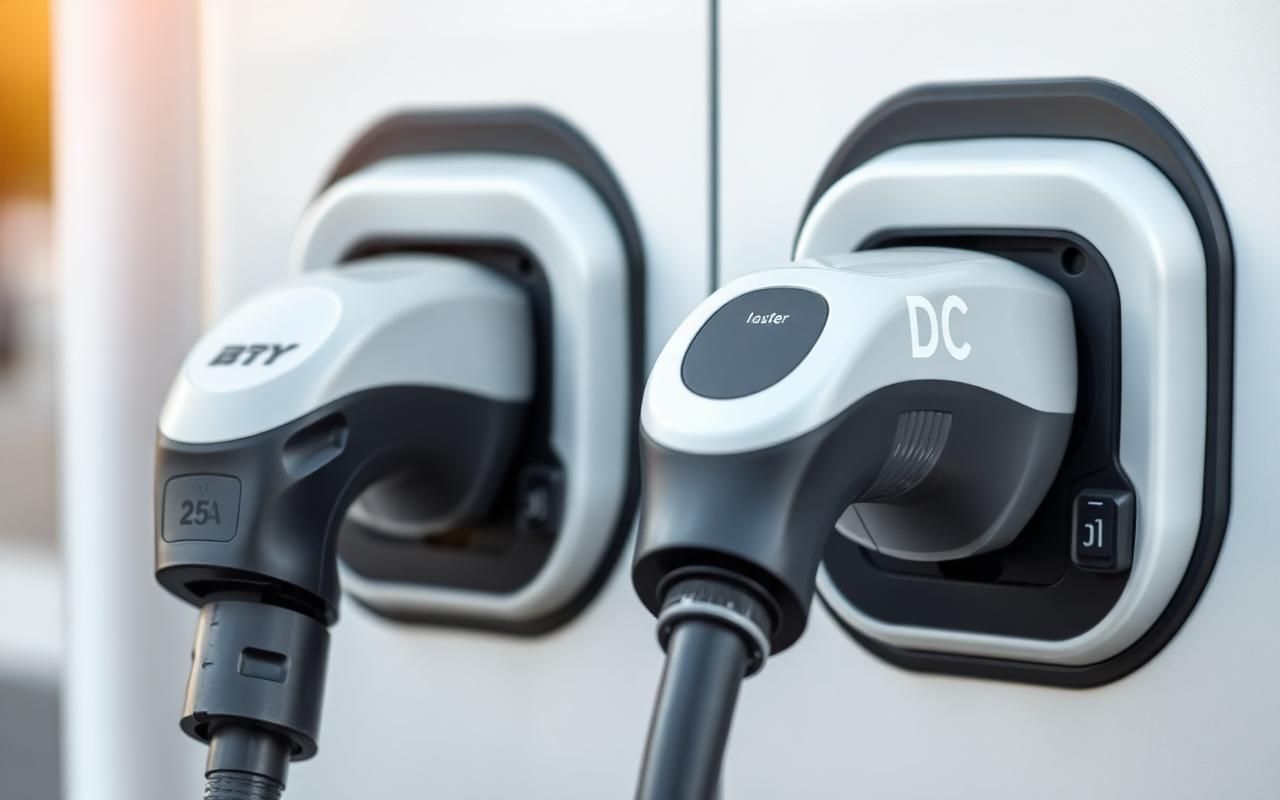
With AC charging, alternating current is supplied to the vehicle and the vehicle’s onboard charger converts it into the direct current required by the battery. This generally makes AC charging slower, but it can be an excellent fit when the vehicle is parked for several hours.
With DC charging, the charging equipment converts the electricity before it reaches the vehicle and supplies DC power directly to the battery. This allows substantially faster charging and makes DC particularly useful when drivers need to get back on the road quickly.
So, in very simple terms:
- AC = longer parking, planned charging, lower-power use cases.
- DC = faster charging, shorter stops, higher-turnover use cases.
But that is only the starting point.
Do Not Choose a Charger Based Only on Charging Speed
A common first-time mistake is to assume that the fastest charger is automatically the best charger.
It is easy to see why. If a DC charger can charge a vehicle much faster than an AC charger, why not install DC everywhere?
Because charging speed is only one part of the equation.
A high-powered charger can require more electrical capacity, different infrastructure, more careful site planning and a business model that can justify the investment. If vehicles are already parked for six or eight hours, ultra-fast charging may provide little additional value.
On the other hand, if vehicles are arriving, charging and leaving quickly, an AC-only installation may not provide the turnaround that users expect.
The right charger is the one that matches the parking behaviour of your location.
Start With One Question: How Long Will the Vehicle Stay?
This is probably the most useful question for a first-time charging partner.
Look at the typical parking duration rather than simply looking at the number of parking spaces.
If vehicles stay for several hours
AC charging can make a lot of sense. The vehicle can charge while the driver is working, shopping, staying at a hotel or sleeping at home.
Typical examples include:
- Housing societies
- Office buildings
- Corporate campuses
- Hotels
- Educational institutions
- Long-stay parking facilities
If vehicles need to leave quickly
DC charging becomes more attractive when drivers cannot afford to wait for a long charging session.
Typical examples include:
- Highway charging stations
- Fleet depots
- Busy commercial locations
- High-turnover parking facilities
- Travel hubs
- Locations serving taxis or commercial vehicles
AC Charging: When It Makes Sense in Mumbai
AC charging is often a practical starting point for properties where parking is already part of the customer’s or resident’s routine.
Consider a Mumbai office building. Employees may arrive in the morning and leave in the evening. There is little reason to optimise the site for a very short charging stop if the vehicle is going to remain parked for most of the working day.
The same principle applies to housing societies. A resident may park overnight for eight or more hours. A suitable AC charger can use that long dwell time instead of requiring high-power infrastructure simply to finish the session as quickly as possible.
Hotels and other long-stay destinations can also benefit because charging becomes part of an existing parking experience.
DC Charging: When Speed Actually Matters
DC charging becomes more useful when time is the limiting factor.
Imagine a driver travelling between Mumbai and Pune or along another major route. The driver may not want to remain at a charging location for several hours. The charging stop needs to fit into the journey.
The same applies to commercial fleets. A vehicle that needs to return to service quickly has a different charging requirement from a private car that will remain parked overnight.
For these locations, DC fast charging can provide the faster turnaround required by the operating model.
What About Malls, Hotels and Commercial Properties?
This is where the answer becomes less obvious.
A mall may have customers who stay for one to three hours, while a hotel may have guests who stay overnight. A commercial property may have employees during the day and visitors during shorter periods.
That means a mixed charging strategy can sometimes be more useful than choosing only AC or only DC.
For example, a property could use AC charging for longer-stay users and provide selected DC charging capacity for drivers who need a quicker session.
The exact combination should be based on site demand, electrical capacity, available parking and the expected operating model.
Your Electrical Capacity Matters More Than You Think
Before selecting the charger, assess the electricity available at the property.
Every charging point adds electrical load. When several chargers operate simultaneously, the total demand can become significant.
A first-time partner should therefore review:
- Existing sanctioned electrical load
- Current property consumption
- Available distribution capacity
- Cabling requirements
- Protection and earthing
- Connection and metering requirements
- Potential future expansion
This is one reason a site assessment is so important. A location may have plenty of parking but still need electrical upgrades before a larger charging installation can be supported.
What About the Cost?
It is tempting to compare chargers only by their purchase price. That can give you the wrong answer.
The overall project cost can include the charger, electrical upgrades, cabling, civil work, installation, connectivity, software, signage, safety equipment and ongoing maintenance.
Higher-powered DC infrastructure can also require a more substantial electrical setup.
Instead of asking “Which charger is cheaper?”, ask:
“Which charging setup gives this location the right combination of utilisation, user experience and operating cost?”
A lower-cost charger that is poorly matched to the location may perform worse than a more suitable system that receives consistent use.
Think About Your User Before Your Hardware
Different users have different expectations.
Residents
Residents generally value convenient access and predictable charging. Overnight charging can make AC a natural fit in many residential situations.
Employees
Employees may leave vehicles parked for most of the workday. This creates an opportunity to charge without requiring very high charging power.
Customers
Retail and hospitality customers may want charging as an additional service while they shop, eat or stay.
Highway travellers
Highway drivers are more likely to prioritise charging speed and availability because charging is part of a longer journey.
Fleet operators
Fleet operators need to think about schedules, vehicle utilisation, turnaround times and how many vehicles need to charge simultaneously.
Do You Need AC, DC or Both?
There is no rule that says a location has to choose one technology exclusively.
A mixed charging setup can be useful where a property serves different types of users.
For example, a commercial property could have several AC charging points for employees and long-stay visitors, combined with a smaller number of DC chargers for users who need faster turnaround.
This can also provide a path for gradual expansion. An operator can start with the charging format that addresses the strongest current demand and add another type later as usage patterns become clearer.
Connector Compatibility Still Matters
Before purchasing any charging equipment, understand the vehicles you expect to serve.
Check connector standards, vehicle compatibility, charging power requirements and communication capabilities. A charger that looks ideal on paper is not useful if it does not meet the requirements of the vehicles using the site.
For larger or public-facing installations, compatibility should be considered alongside payment, authentication, software and customer-support requirements.
Parking Layout Can Make or Break the Experience
Even a technically good charger can create a poor customer experience if the parking design is difficult.
Think about how vehicles enter and leave the charging bay, where cables will run, whether pedestrians need to cross the charging area, how other vehicles move around the site and whether charging bays are clearly marked.
For Mumbai properties, where parking can already be tight, charger placement should be planned carefully so charging does not unnecessarily disrupt normal parking operations.
Do Not Forget Software and Monitoring
A charging station is not just hardware sitting in a parking bay.
Once you have multiple chargers, you need a practical way to understand whether they are available, occupied, charging or experiencing a fault.
Charging management software can provide visibility into station status, sessions, energy usage and operational issues. It can also support access and payment workflows depending on the system being used.
This becomes particularly important when an operator manages charging points across multiple properties.
Plan for Future Demand, Not Just Today’s EVs
Your first charging installation should not become a dead end.
Even if you start with a small number of chargers, think about what happens if usage doubles or triples.
Can additional chargers be added? Is there room for more electrical capacity? Can cables and distribution equipment be expanded? Can the software support more charging points?
Planning for expansion during the first installation can make future growth much easier.
A Simple AC vs DC Decision Framework
Use this as a starting point:
| Factor | AC Charging | DC Fast Charging |
|---|---|---|
| Typical use | Longer parking | Quick turnaround |
| Charging speed | Generally slower | Generally faster |
| Good fit | Homes, societies, offices, hotels | Highways, fleets, busy sites |
| Parking duration | Several hours | Shorter stops |
| Electrical demand | Generally lower per point | Generally higher per point |
| Best priority | Convenient scheduled charging | Fast vehicle turnaround |
This table is a starting point, not a substitute for a professional site assessment.
Common Mistakes First-Time Charging Partners Make
1. Choosing the highest-power charger
More power is not automatically better. Match the charger to the use case.
2. Ignoring electrical capacity
Always assess the existing electrical infrastructure before committing to charger quantities and power levels.
3. Looking only at hardware price
Consider installation, electrical upgrades, software, maintenance and operating costs as part of the complete project.
4. Installing chargers without understanding parking behaviour
Charging demand depends heavily on when vehicles arrive, how long they stay and when they need to leave.
5. Forgetting future expansion
A small installation today should not prevent you from expanding tomorrow.
6. Treating software as optional
For a growing charging network, visibility into charger status and usage can become essential for operations.
What Should a First-Time Mumbai Partner Do First?
Do not start by requesting a quote for a specific charger.
Start with a site assessment.
Document the parking capacity, typical dwell time, user types, current EV demand, electrical capacity, accessibility, potential charger locations and expected future demand.
Then compare AC, DC and mixed options against those requirements.
This process gives you a much better basis for evaluating charging proposals from different suppliers or operators.
Where Weej Wala Fits In
For businesses, property owners and other first-time EV charging partners, the objective should be to build a charging solution around the location rather than forcing the location to fit a particular charger.
Weej Wala focuses on EV charging infrastructure for different use cases, including residential, commercial, parking and mobility locations. A practical assessment can help determine whether AC charging, DC fast charging or a combination is the better fit for a particular property.
Final Takeaway
Choosing between AC and DC does not have to be complicated.
If vehicles stay parked for several hours, AC charging is often the logical starting point. If drivers need faster turnaround, DC charging may be more appropriate. If your property serves different types of users, a combination can make sense.
The most important decision, however, is not the charger itself. It is understanding the location.
Look at parking duration, users, electrical capacity, vehicle compatibility, operating costs and future demand before selecting the hardware.
For a first-time EV charging partner in Mumbai, that simple approach can prevent an expensive mistake and help create a charging station that actually works for the people using it.
Frequently Asked Questions
Is AC or DC charging better?
Neither is universally better. AC is often better for longer parking durations, while DC is better when faster turnaround is important. The right choice depends on the location and its users.
Is AC charging suitable for housing societies?
AC charging can be well suited to housing societies because vehicles often remain parked for several hours or overnight. The final choice should consider the society’s electrical capacity, parking arrangement and charging requirements.
Is DC charging better for highways?
DC fast charging is generally more suitable for highway locations because drivers typically want to minimise charging time and continue their journey.
Can a property use both AC and DC chargers?
Yes. A mixed installation can serve users with different parking durations and charging needs, provided the electrical infrastructure and operating model support it.
What should I check before installing an EV charger?
Assess parking duration, vehicle types, electrical capacity, charger location, connector compatibility, access, safety, software, payments, maintenance and future expansion requirements.
Does a higher-power charger always mean better performance?
No. Higher charging power only helps when the vehicle, electrical infrastructure and user requirements can make effective use of it.
Ready to assess AC vs DC charging for your Mumbai location? Start with the site, understand the users and then select the charging solution that fits the way your property actually operates.