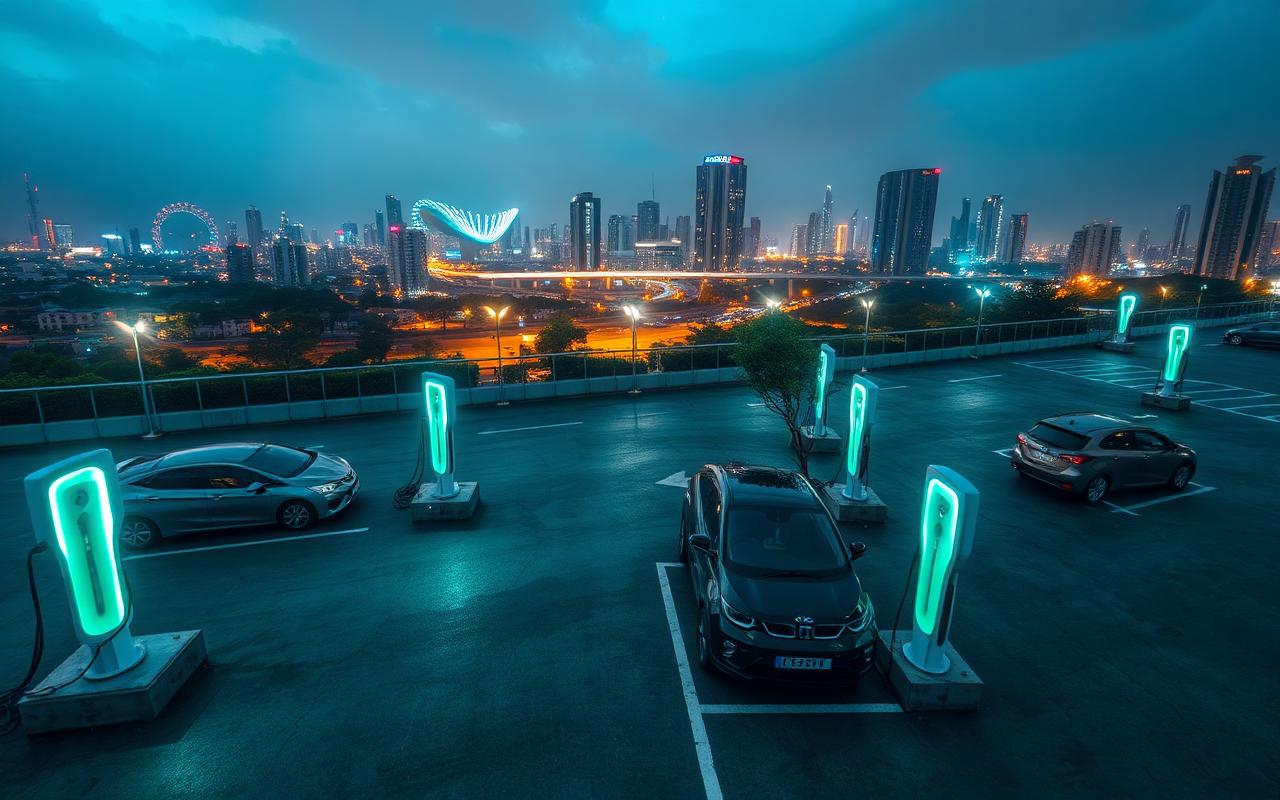
Mumbai has always treated parking space as a premium asset. A few well-located parking bays can make a meaningful difference to how a commercial property, office, hotel, mall or public parking facility performs. Now, as electric vehicles become a larger part of urban mobility, those same parking spaces are taking on another role: they can become part of the city’s EV charging infrastructure.
That is why smart property owners and parking operators are looking at EV charging differently. The opportunity is not simply to install a charger and wait for EV drivers to arrive. It is to use an existing parking asset more effectively while creating a better experience for customers, employees, residents and fleet operators.
For Mumbai and the wider MMR, this shift is particularly relevant because land is limited, parking is valuable and charging infrastructure needs to fit into the places where people already park.
Why Parking Space Is Becoming an EV Charging Asset
A charging station needs more than a charger. It needs a suitable parking bay, electrical capacity, safe access, connectivity, clear signage and an operating model. Parking operators already control one of the most important pieces of that equation: the physical space where the vehicle can remain while it charges.
This creates an important opportunity. Instead of treating EV charging as a completely separate infrastructure project, operators can integrate it into existing parking operations.
A parking bay at an office can support workplace charging. A hotel parking area can serve guests. A mall can provide charging while customers shop or dine. A housing society can support residents who park overnight. A fleet depot can use charging bays for scheduled vehicle operations.
The value comes from matching the charging solution to the way the parking space is already being used.
Mumbai’s Parking Challenge Can Actually Help EV Charging
In a city where every square foot matters, adding new land specifically for charging infrastructure is not always practical. The better approach can be to identify parking locations that already have the right characteristics.
Good locations may include commercial parking facilities, office campuses, hotels, malls, hospitals, housing societies, fleet depots and other destinations where vehicles naturally spend time.
The Maharashtra EV Policy 2025 also places greater emphasis on charging-ready parking. The policy states that new residential buildings should be designed so that 100% of parking spaces are EV charging ready, while new commercial buildings should have at least 50% of their parking spaces EV charging ready. For existing commercial buildings with shared parking, the policy provides for 20% of total parking spaces to have operational charging stations.
The Key Question: How Long Do Vehicles Stay Parked?
The best EV charging setup depends heavily on parking duration.
Offices and Corporate Parking
Employees may leave their vehicles parked for several hours. This makes workplace parking a natural environment for planned charging. The charging strategy can focus on making use of the available dwell time rather than simply maximising charging speed.
Housing Societies
Residential vehicles may remain parked overnight or for long periods during the day. This can make slower, scheduled charging practical, provided the electrical infrastructure and parking arrangement are designed appropriately.
Malls and Retail Destinations
Mall visitors may stay for a few hours. Charging can become an additional amenity that fits naturally into the shopping, dining and entertainment experience.
Hotels
Hotels can serve a mix of short-stay visitors and overnight guests. The charging solution can therefore be planned around both convenience and longer parking durations.
Fleet and Commercial Vehicles
Fleet operations require a different approach. Vehicles may follow fixed schedules, return to a depot at predictable times and need to be ready for the next operating cycle. Charging capacity, scheduling and utilisation become especially important.
The important point is simple: parking duration should influence charger selection, capacity planning and the operating model.
AC or DC? Choose Based on the Parking Use Case
One of the most common mistakes is selecting a charger primarily on its maximum power rating. A better starting point is the site’s actual use.
AC charging can be well suited to longer dwell times such as residential parking, offices, hotels and other long-stay locations. DC fast charging can be more appropriate where drivers need faster turnaround and vehicles cannot remain parked for long.
Some locations may benefit from a combination of charging options. The objective is not to install the biggest charger possible. The objective is to create a charging setup that matches demand, electrical capacity, parking turnover and the needs of the users.
EV-Ready Parking Is Not the Same as Installing a Charger
There is an important difference between making a parking space EV charging ready and installing an operational charging station.
An EV-ready space may include provisions such as electrical infrastructure, conduit, cabling routes and other requirements that make future charger installation easier. A fully operational charging bay goes further by providing the charger and the systems required to deliver charging services.
Planning for EV readiness early can reduce future disruption. Electrical routes, distribution capacity, parking layouts and equipment locations can be considered before the property is fully occupied or the parking area becomes difficult to modify.
Parking Operators Can Build More Than a Single Charging Point
Another reason smart operators are moving early is scalability.
A property does not necessarily need to start with a large number of chargers. A more practical strategy can be to begin with a carefully selected number of charging bays, monitor utilisation and then expand based on actual demand.
This approach turns the parking area into a scalable charging asset. As usage increases, operators can evaluate whether more charging bays are required, whether the charger mix should change, whether additional electrical capacity is needed and whether pricing or access rules should be adjusted.
Underused Parking Can Become More Useful
Not every parking location has the same utilisation throughout the day. Some properties have high demand during business hours and relatively low utilisation at other times. Others have different patterns on weekdays and weekends.
EV charging can create another use for selected parking spaces, provided the operational model is designed properly.
The goal is not to convert every parking space into a charging bay. It is to identify the spaces where charging can add the most value without disrupting the core parking function.
Electrical Capacity Should Be Checked Before Installation
Parking space may be available, but that does not automatically mean the electrical infrastructure can support the planned charging load.
Before equipment is selected, operators should review the site’s electrical capacity, existing loads, distribution infrastructure, connection requirements and future expansion plans.
Simultaneous charging can create significant demand if several vehicles begin charging at the same time. Smart load management can help operators coordinate charging activity and use available electrical capacity more effectively.
Safety Has to Be Part of the Parking Design
EV charging should be integrated into the overall safety and operating plan of the property.
Operators should consider charger placement, cable management, vehicle movement, pedestrian access, emergency access, electrical protection, drainage and other site-specific requirements.
Mumbai Fire Brigade and BMC have issued fire-safety guidance for EV charging installations covering locations such as residential and commercial buildings and public parking areas, including specific considerations for covered and basement parking.
Charging infrastructure should therefore be planned with qualified professionals and in accordance with applicable electrical, fire-safety, building and equipment requirements.
Software Can Make a Parking-Based Charging Network Easier to Manage
Once a property has multiple charging points, manually checking every charger becomes increasingly difficult.
A centralised charging management platform can give operators visibility into charger status, sessions, energy usage and operational issues. Remote monitoring can also help teams identify faults and prioritise maintenance.
For drivers, software can support station discovery, availability information, charging sessions and payment workflows. A simpler digital experience can reduce friction and make charging easier to use.
Charging Can Add Value to the Property Beyond Charging Revenue
The business case for EV charging should not always be measured only by the direct revenue generated by charging sessions.
For some properties, charging can be a customer amenity. For others, it can support employee retention, attract EV-driving customers, improve the property’s sustainability offering or strengthen relationships with fleet and mobility partners.
Why Moving Early Can Matter
EV adoption does not happen overnight, but infrastructure decisions often take time. Electrical planning, approvals, equipment selection, installation, safety reviews and operational setup can all require coordination.
Operators who wait until charging demand becomes obvious may find that suitable parking spaces, electrical capacity or installation windows are already constrained.
Moving early does not necessarily mean installing a large charging network immediately. It can simply mean planning the property so that expansion is easier when demand increases.
A Practical Checklist for Property and Parking Operators
- How many vehicles use the parking area each day?
- How long do vehicles typically remain parked?
- How many EVs are already using the property?
- What future EV demand is expected?
- Which parking bays are best suited for charging?
- What electrical capacity is available?
- Would AC, DC or a combination of chargers suit the site?
- How will users access and pay for charging?
- How will charger status and faults be monitored?
- What signage and wayfinding will drivers need?
- How will cables, pedestrian routes and vehicle movement be managed?
- What fire-safety and electrical requirements apply to the location?
- How can the installation be expanded later?
Government Support and the Wider EV Infrastructure Push
Maharashtra has also established an EV charging infrastructure incentive process through the state’s EV incentive portal, with MSEDCL acting as the State Nodal Agency and DISCOM-level verification and inspection forming part of the process. Eligibility and applicable incentives should be checked against the current official scheme requirements before making an investment decision.
Public parking is already part of Mumbai’s charging-infrastructure conversation. For example, HPCL announced an agreement with BMC to establish EV charging infrastructure at selected BMC public parking locations, including 20 charging units across 10 public parking stations.
The Real Opportunity Is Parking + Charging + Experience
The strongest EV charging locations are not necessarily the places with the most chargers. They are often the places where charging fits naturally into an existing journey.
A driver already needs to park. If the parking location also provides convenient charging, the two services reinforce each other.
That creates a more useful proposition for both sides. Drivers get charging where they already spend time, while property and parking operators can make selected spaces more productive.
Final Takeaway
Mumbai’s parking shortage is usually viewed as a challenge. For EV infrastructure, it can also become an opportunity.
The smartest operators are not simply asking, “Where can we install a charger?” They are asking, “Which parking spaces can become valuable charging assets without disrupting how our property operates?”
That change in thinking can lead to better site selection, smarter electrical planning, a more useful charging mix and a better driver experience.
As EV adoption continues to grow, properties that plan their parking infrastructure early can be better positioned to respond to future demand. The first step does not have to be installing dozens of chargers. It can be as simple as assessing the parking, electrical capacity, user behaviour and expansion potential today.
For businesses, developers, housing societies, malls, hotels, offices and parking operators in Mumbai and the MMR, the opportunity is clear: the parking spaces you already have may become an important part of the EV charging network you will need tomorrow.
Looking to plan EV charging for your property or parking facility? Weej Wala can help businesses and property operators evaluate charging infrastructure based on site requirements, parking use cases and future scalability.